
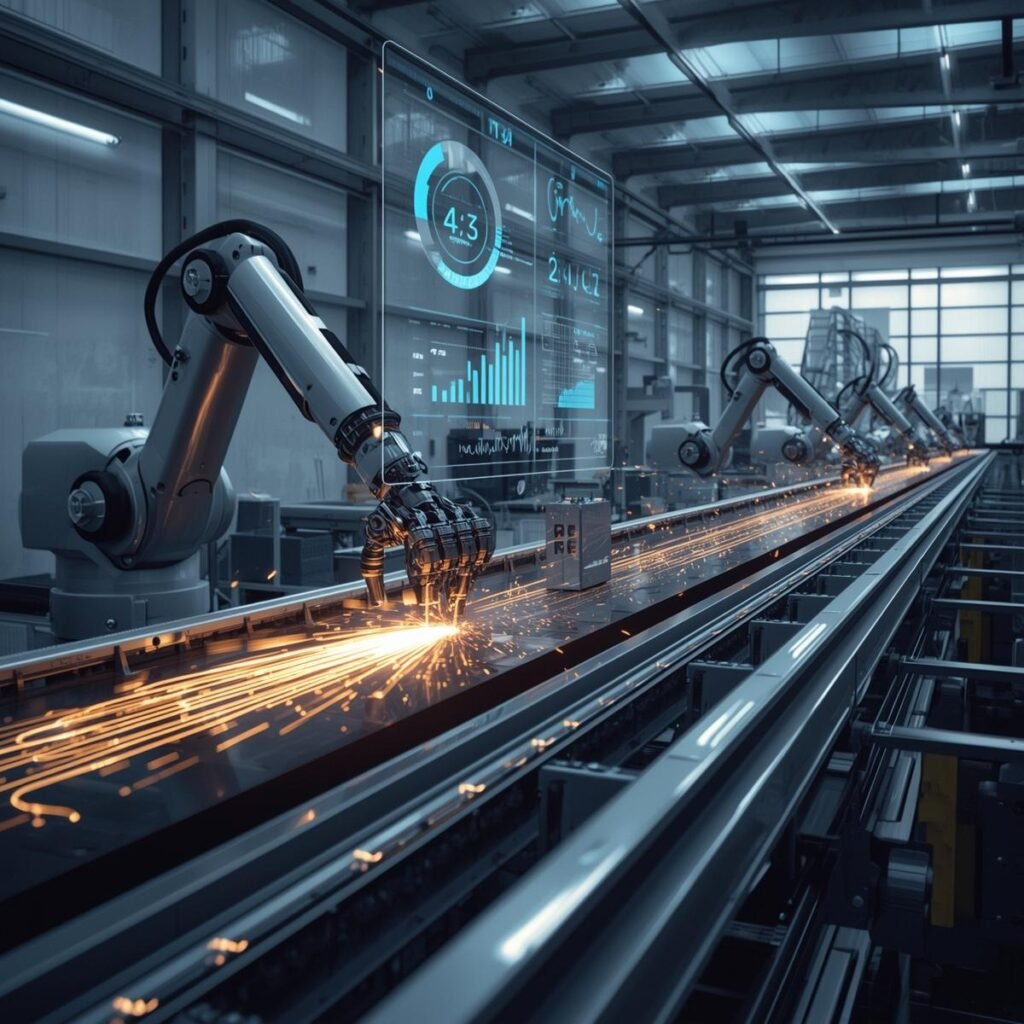

Industrial automation refers to the use of control systems, machines, and robotic technologies to operate manufacturing processes with limited human intervention. Robots play a central role in modern factories by performing repetitive, high precision, and time sensitive tasks. They support production planning, quality control, material handling, and assembly operations.
This article explains how robots improve manufacturing efficiency, reduce operational cost, enhance productivity, and transform industrial systems.
What Is Industrial Automation
Industrial automation is the integration of machines, software, and control systems to manage industrial processes. Instead of relying entirely on manual labor, factories use programmable systems to maintain consistent output.
Automation includes:
- Robotic arms
- Conveyor systems
- Sensors
- Control units
- Data monitoring software
Robots are often coordinated through systems such as ROS or industrial programmable logic controllers.
Role Of Robots In Manufacturing
Robots perform tasks that require repetition, speed, and accuracy. They operate continuously and follow programmed instructions without fatigue.
Key roles include:
- Assembly
- Welding
- Painting
- Packaging
- Material transfer
Industrial robot manufacturers such as ABB and KUKA supply robotic systems used across global factories.
How Robots Improve Manufacturing Efficiency
1. Increased Production Output
Robots operate for extended hours without breaks. Continuous operation increases daily production volume. Automated production lines reduce downtime between cycles.
Robotic arms perform repetitive actions at consistent speed, which increases throughput.
2. Improved Accuracy
Manufacturing often requires precise measurements. Robots follow programmed instructions with minimal deviation. This reduces variation in product dimensions and assembly alignment.
Precision reduces material waste and rework.
3. Reduction In Human Error
Manual processes may result in inconsistencies. Robots execute predefined commands without deviation. This improves reliability across batches.
Reduced error leads to stable production flow.
4. Lower Operational Cost
Although initial setup requires investment, automation reduces long term labor expenses. Robots perform tasks that would otherwise require multiple workers.
Cost savings also result from reduced waste and lower defect rates.
5. Enhanced Workplace Safety
Manufacturing environments may involve hazardous materials, heavy loads, or high temperature processes. Robots handle dangerous tasks such as welding and chemical handling.
This reduces risk exposure for workers.
6. Faster Cycle Times
Robots complete operations within fixed time intervals. Automation reduces delays caused by manual transitions.
Shorter cycle times increase overall productivity.
Key Components Of Automated Manufacturing Systems
Industrial automation integrates several subsystems.
Robotic Arms
Robotic manipulators handle assembly, welding, and material transfer. They operate on programmed motion paths.
Sensors
Sensors monitor position, temperature, pressure, and alignment. Feedback ensures quality control.
Programmable Logic Controllers
Programmable logic controllers manage process sequences. They coordinate machine operations.
Supervisory Control Systems
Supervisory systems collect production data and monitor performance metrics.
Applications Of Robots In Manufacturing
Automotive Industry
Robots assemble vehicle components, weld frames, and apply coatings. Automotive factories were early adopters of robotic automation.
Electronics Manufacturing
Robots handle small components with precision. Circuit board assembly uses automated placement machines.
Food Processing
Robots manage packaging, sorting, and palletizing. Hygiene compliance is supported by automated systems.
Pharmaceutical Production
Robots assist in packaging, inspection, and sterile handling procedures.
Integration With Artificial Intelligence
Modern manufacturing integrates robotics with artificial intelligence. AI enables predictive maintenance and data driven decision making.
Benefits include:
- Equipment performance monitoring
- Failure prediction
- Process optimization
AI powered inspection systems identify defects using machine vision.
Data And Smart Manufacturing
Automation generates production data. Factories analyze this information to improve operations.
Data supports:
- Inventory tracking
- Supply chain coordination
- Production scheduling
Smart factories connect machines through network systems.
Flexible Manufacturing Systems
Robotic automation allows rapid configuration changes. Manufacturers adjust production lines for new product models.
Flexible systems support:
- Small batch production
- Custom manufacturing
- Rapid prototyping
This adaptability increases competitiveness.
Challenges In Industrial Automation
Despite advantages, automation involves challenges.
Initial Investment
Robotic systems require capital expenditure.
Skilled Workforce Requirement
Engineers must manage programming and maintenance.
System Integration
Integrating new robots with legacy equipment can be complex.
Cybersecurity Risks
Connected factories face potential network threats.
Manufacturers implement security protocols to protect systems.
Return On Investment
Companies evaluate automation through performance indicators such as:
- Production rate
- Defect rate
- Downtime reduction
- Labor cost savings
Positive return on investment often occurs after sustained operation.
Human And Robot Collaboration
Collaborative robots, often called cobots, work alongside human operators. These systems include safety sensors that detect human presence.
Collaboration allows humans to manage planning while robots perform physical tasks.
Maintenance And Lifecycle Management
Industrial robots require regular maintenance. Preventive maintenance reduces downtime.
Maintenance includes:
- Software updates
- Mechanical inspection
- Calibration
Predictive maintenance systems analyze equipment data to schedule repairs.
Environmental Impact
Automation can reduce material waste and optimize energy usage. Efficient production processes minimize resource consumption.
Sustainable manufacturing benefits from data driven monitoring systems.
Future Of Industrial Automation
Manufacturing continues to evolve through digital transformation.
Emerging trends include:
- Autonomous mobile robots
- Cloud based monitoring
- Edge computing
- Integrated supply chain systems
Factories aim for interconnected production networks with minimal downtime.
Frequently Asked Questions
How Do Robots Improve Manufacturing Efficiency
Robots increase production output, reduce errors, and operate continuously.
Are Robots Replacing Human Workers
Robots automate repetitive tasks while humans manage oversight, programming, and maintenance.
What Industries Use Industrial Robots
Automotive, electronics, food processing, and pharmaceutical sectors rely on robotic automation.
Conclusion
Industrial automation transforms manufacturing through robotic integration. Robots improve efficiency by increasing production speed, reducing error, and enhancing safety. Data driven systems support predictive maintenance and operational planning.
As industries adopt interconnected technologies, robots will continue to shape global manufacturing systems. Understanding how robots improve manufacturing efficiency helps organizations make informed decisions about automation strategies.