
Robotics is a field that combines engineering, computer science, and control systems to design machines that can perform tasks with limited or no human intervention. Robots operate through mechanical structures, electronic circuits, sensors, actuators, and software logic. These elements form the foundation of robotic systems used in manufacturing, healthcare, logistics, research, and education.
This article explains robotics components and core systems in detail. It covers mechanical structure, sensors, actuators, controllers, power systems, programming, communication, integration, and industrial applications.
What Is Robotics
Robotics is the study and development of programmable machines capable of carrying out actions. A robot is a system that senses its environment, processes information, and performs actions based on programmed instructions or learned patterns.
A robotic system integrates hardware and software to complete defined objectives.
History Of Robotics
The concept of automated machines dates back to early mechanical devices. The word robot was introduced by Karel Capek in a stage play in 1920. Industrial robots became common in factories during the 1960s.
Companies such as Unimation developed early robotic arms for manufacturing. Over time, robotics expanded into healthcare, defense, agriculture, and service industries.
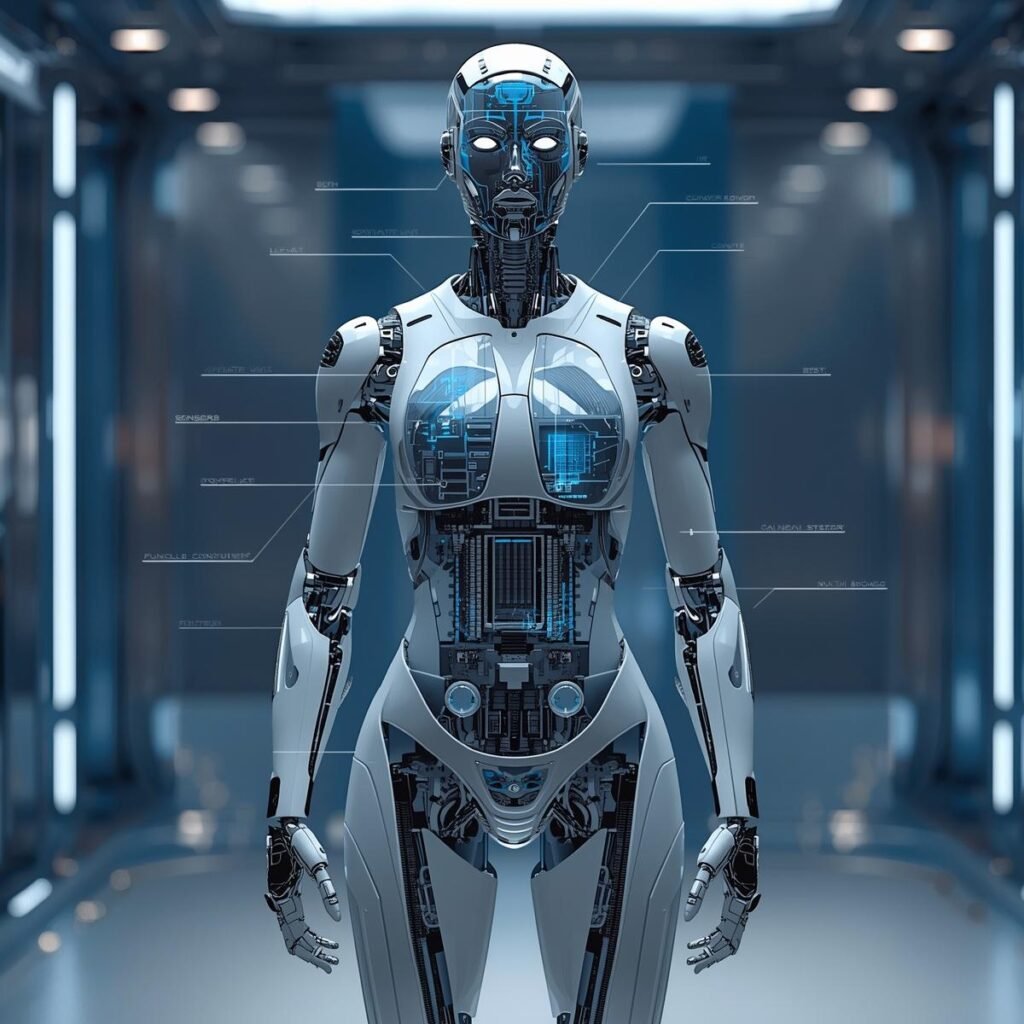
Core Components Of A Robot
A robot consists of multiple interconnected systems. Each component plays a defined role.
Mechanical Structure
The mechanical structure forms the physical body of the robot. It includes:
- Frame
- Joints
- Links
- End effectors
The structure determines range of motion and load capacity.
Robotic arms often use rotational joints to simulate human arm movement.
Sensors
Sensors allow robots to collect data from the environment.
Types of sensors include:
- Proximity sensors
- Vision sensors
- Temperature sensors
- Pressure sensors
- Gyroscopes
Sensors convert physical signals into electrical data for processing.
For example, vision systems may use cameras to capture images. Data is processed using computer vision algorithms.
Actuators
Actuators enable physical movement. They convert energy into motion.
Common actuator types:
- Electric motors
- Hydraulic systems
- Pneumatic systems
Actuators control wheels, arms, grippers, and other moving parts.
Controller
The controller functions as the brain of the robot. It processes sensor input and sends commands to actuators.
Controllers often include microcontrollers or industrial computers. Many systems use platforms such as ROS to manage communication and coordination between components.
Power Supply
Robots require energy to operate.
Power sources include:
- Batteries
- Electrical grid connections
- Solar panels
Power management systems regulate voltage and current.
End Effectors
End effectors are tools attached to robotic arms. Examples include:
- Grippers
- Welding torches
- Suction cups
- Cutting tools
The end effector defines the task capability of the robot.
Core Robotic Systems
Robotics involves several integrated systems.
Control System
The control system governs motion and decision making. It processes sensor data and determines output actions.
Control methods include:
- Open loop control
- Closed loop control
Closed loop systems use feedback to adjust movement.
Navigation System
Mobile robots rely on navigation systems to move within environments.
Navigation involves:
- Mapping
- Localization
- Path planning
Autonomous systems use simultaneous localization and mapping algorithms.
Perception System
Perception systems interpret sensor data. They enable object recognition and environment analysis.
Applications include:
- Obstacle detection
- Face recognition
- Quality inspection
Perception integrates cameras, lidar, and machine learning models.
Communication System
Robots communicate with other machines and control centers.
Communication methods:
- Wireless networks
- Ethernet connections
- Cloud platforms
Network connectivity allows remote monitoring and updates.
Robot Programming
Programming defines robot behavior.
Languages used in robotics include:
- Python
- C++
- Java
Robots can be programmed through:
- Direct coding
- Teach pendant systems
- Simulation software
Simulation tools allow testing before physical deployment.
Types Of Robots
Robots are classified based on function and structure.
Industrial Robots
Used in manufacturing and assembly.
Service Robots
Assist humans in healthcare, hospitality, and domestic settings.
Mobile Robots
Operate on wheels or tracks.
Humanoid Robots
Designed with human like structure.
Organizations such as Boston Dynamics develop advanced mobile systems.
Robotics In Manufacturing
Manufacturing uses robotics for:
- Welding
- Painting
- Packaging
- Material handling
Robots increase production rate and consistency.
Robotics In Healthcare
Healthcare robots assist in:
- Surgical procedures
- Rehabilitation
- Patient monitoring
Robotic surgery systems provide precision in operations.
Robotics In Agriculture
Agricultural robots perform:
- Crop monitoring
- Harvesting
- Soil analysis
Automation reduces manual labor requirements.
Robotics Integration With Artificial Intelligence
Artificial intelligence enhances robotic capability.
AI enables:
- Object recognition
- Decision making
- Adaptive control
Machine learning models help robots adjust to new conditions.
Safety In Robotics
Safety measures include:
- Emergency stop systems
- Collision detection
- Protective barriers
Industrial standards regulate robot deployment.
Challenges In Robotics
Robotics faces challenges such as:
- High development cost
- Complex integration
- Maintenance requirements
- Security risks
Continuous research aims to address these issues.
Future Of Robotics
Future developments focus on:
- Autonomous systems
- Human robot collaboration
- Cloud robotics
- Edge computing
Integration with AI will expand robotic applications across industries.
Frequently Asked Questions
What Are The Main Components Of A Robot
Mechanical structure, sensors, actuators, controller, power supply, and software.
How Do Robots Sense Their Environment
Through sensors such as cameras, proximity detectors, and gyroscopes.
What Is The Role Of A Controller In Robotics
The controller processes data and sends commands to actuators.
Conclusion
Robotics combines mechanical engineering, electronics, and software systems to create programmable machines. Core components include sensors, actuators, controllers, and power systems. Integrated subsystems manage perception, navigation, and communication.
Understanding robotics components and core systems provides insight into how robots function in manufacturing, healthcare, agriculture, and service industries.